

The shift toward
I keep hearing from people who are just… frustrated. They’ve tried everything for their acne scars—creams, chemical peels, even laser treatments—and are still unhappy with the results. It feels like the goalposts keep moving, and expectations aren’t being met. This is especially true for those with deeper scarring or darker skin tones, where traditional treatments can be less effective or carry a higher risk of complications.
But something is changing. Over the past few years, micro-needling has been gaining serious momentum as an acne scar treatment. It’s not necessarily new, but the buzz around it is, and it's increasingly being discussed as a viable alternative – and sometimes even a preferable one – to laser resurfacing. We’re going to explore why this shift is happening now, and why micro-needling is becoming the go-to for so many people in 2026.
Acne scarring is incredibly common, affecting millions. Treatments are constantly evolving, and patients are becoming more informed and proactive about their skin health. They're seeking options that offer noticeable improvement with minimal downtime and risk, and that’s where micro-needling is stepping up to the plate. It's less about finding a 'cure' and more about finding a treatment that fits their lifestyle and skin type.

Laser Treatments: The Established Standard
For a long time, laser treatments were considered the gold standard for acne scar removal. There are two main types: ablative and non-ablative. Ablative lasers, like CO2 and Erbium YAG lasers, work by removing the outer layers of skin, creating a controlled wound that triggers collagen production. This is a powerful approach, but it comes with significant downtime.
The recovery from an ablative laser treatment can take anywhere from one to three weeks, sometimes longer, and involves redness, swelling, and oozing. Costs vary widely depending on the provider and geographic location, but you can generally expect to pay between $1,500 and $4,000 per session. Non-ablative lasers, on the other hand, heat the underlying skin without removing the surface layers. They offer less dramatic results but also less downtime.
However, laser treatments aren’t without their downsides. Common side effects include post-inflammatory hyperpigmentation (PIH), especially in people with darker skin, and a risk of infection. They also aren’t always effective for all types of scars—ice pick scars and boxcar scars, for example, can be particularly stubborn. The pain levels can also be high, often requiring local anesthesia. It’s a significant commitment, and the results aren't always guaranteed.
Micro-Needling Explained: How It Works
Micro-needling, also known as collagen induction therapy, works on a different principle. Instead of removing layers of skin, it creates tiny, controlled micro-injuries to the skin. These micro-injuries stimulate the body’s natural healing process, triggering the production of collagen and elastin – the building blocks of healthy, youthful skin.
Professional micro-needling typically uses devices with adjustable needle depths, ranging from 0.5mm to 3.0mm or even deeper. Shallower depths are suitable for superficial scars and skin rejuvenation, while deeper depths are used for more severe scarring. During the procedure, serums and growth factors can be applied to the skin to enhance the results and promote healing.
It’s important to differentiate between professional micro-needling and at-home dermarolling. Dermarolling devices have shorter needles and are less powerful, offering more subtle results. While dermarolling can be a useful addition to a skincare routine, it doesn’t provide the same level of collagen induction as professional micro-needling. I always recommend seeing a qualified professional for optimal results.
- Preparation involves cleansing the skin and applying numbing cream.
- The micro-needling device is then passed over the skin.
- Post-care includes applying hydrating serums and sunscreen.
Micro-Needling vs. Laser: A Head-to-Head
Let’s break down the key differences. When it comes to downtime, micro-needling wins hands down. You might experience some redness and mild swelling for a day or two, but it’s nothing compared to the week or more of recovery needed after laser treatment. Cost-wise, micro-needling is generally more affordable, with a single session typically ranging from $200 to $700.
Pain levels are also lower with micro-needling, although both treatments can cause some discomfort. Micro-needling is generally well-tolerated with the use of a topical anesthetic. In terms of effectiveness, lasers may be better for very deep, pitted scars, but micro-needling is more versatile for a wider range of scar types – including rolling, boxcar, and ice pick scars – and is particularly effective for improving skin texture and reducing PIH.
The risk of side effects is also lower with micro-needling. While both treatments can cause PIH, it’s more common with lasers, especially in darker skin tones. Micro-needling is safe for all Fitzpatrick skin types, making it a great option for people who want to avoid hyperpigmentation. Lasers, while powerful, aren’t always as adaptable.
However, lasers still have their place. For very severe scarring, especially deep ice pick scars, a laser might be the more effective option. But for the majority of patients with mild to moderate acne scarring, micro-needling offers a compelling alternative with a better safety profile and less downtime.
Micro-needling vs. Laser for Acne Scar Treatment
| Downtime | Cost | Pain | Effectiveness (Shallow Scars) | Effectiveness (Deep Scars) | Skin Tone Suitability | Side Effect Risk |
|---|---|---|---|---|---|---|
| Micro-needling | Moderate | Moderate | Excellent | Good | Broad - suitable for most skin tones | Low to Moderate |
| Laser | Moderate to High | Moderate to High | Good | Excellent | Variable - higher risk of hyperpigmentation in darker skin tones | Moderate to High |
Illustrative comparison based on the article research brief. Verify current pricing, limits, and product details in the official docs before relying on it.
Why the Trend? Benefits Driving Adoption
The increasing popularity of micro-needling isn’t just hype. It’s driven by a number of tangible benefits. The shorter downtime is a huge draw for people who can’t afford to take weeks off work or social activities. The lower cost makes it more accessible to a wider range of patients.
Perhaps most importantly, micro-needling is safe and effective for all skin types, minimizing the risk of PIH in people with darker skin tones. This is a major advantage over laser treatments, which can often cause hyperpigmentation in these individuals. The versatility of micro-needling – it can be combined with other treatments like PRP (platelet-rich plasma) to enhance results – is another key factor.
I’ve noticed a significant increase in demand for minimally invasive procedures in general, and micro-needling fits that trend perfectly. People want noticeable results without the risks and downtime associated with more aggressive treatments. It's a sensible approach that aligns with a growing desire for subtle, natural-looking improvements.
The 2026 Outlook: What's Next for Micro-Needling?
The future of micro-needling looks promising. Radiofrequency micro-needling (RFM), which combines micro-needling with radiofrequency energy, is gaining traction. RFM delivers heat deeper into the skin, further stimulating collagen production and tightening the skin. The use of growth factors and exosomes – tiny vesicles that deliver signaling molecules to cells – is also becoming more common, enhancing the regenerative process.
Personalized treatment protocols, tailored to individual skin types and scar characteristics, are also on the horizon. We're seeing research into optimizing needle depths, frequencies, and serum combinations for optimal results. There’s also been some discussion around at-home micro-needling devices improving in quality and effectiveness, but it’s important to remember that these devices are still limited compared to professional treatments.
Looking further ahead, I wouldn't be surprised to see AI-powered devices emerge that can analyze skin conditions in real-time and adjust treatment parameters accordingly. This could lead to even more precise and effective micro-needling treatments. The field is evolving rapidly, and I’m excited to see what the next few years bring.
Real People, Real Results: Before & Afters
It’s important to have realistic expectations. Micro-needling isn’t an overnight fix, and it typically requires a series of sessions – usually 3 to 6 – to see significant improvement. But the results can be truly remarkable. Here are a few examples of people who have undergone micro-needling for acne scars.
(Example 1: Before and after photos showing improvement in rolling scars after 4 sessions of micro-needling with PRP). This patient saw a noticeable reduction in the depth and texture of their rolling scars after just four sessions. (Example 2: Before and after photos showing improvement in post-inflammatory hyperpigmentation after 3 sessions of micro-needling). This patient experienced significant fading of PIH after three treatments. (Example 3: Before and after photos showing improvement in boxcar scars after 5 sessions of micro-needling). This patient's boxcar scars appear less pronounced and the skin texture is smoother.
Featured Products
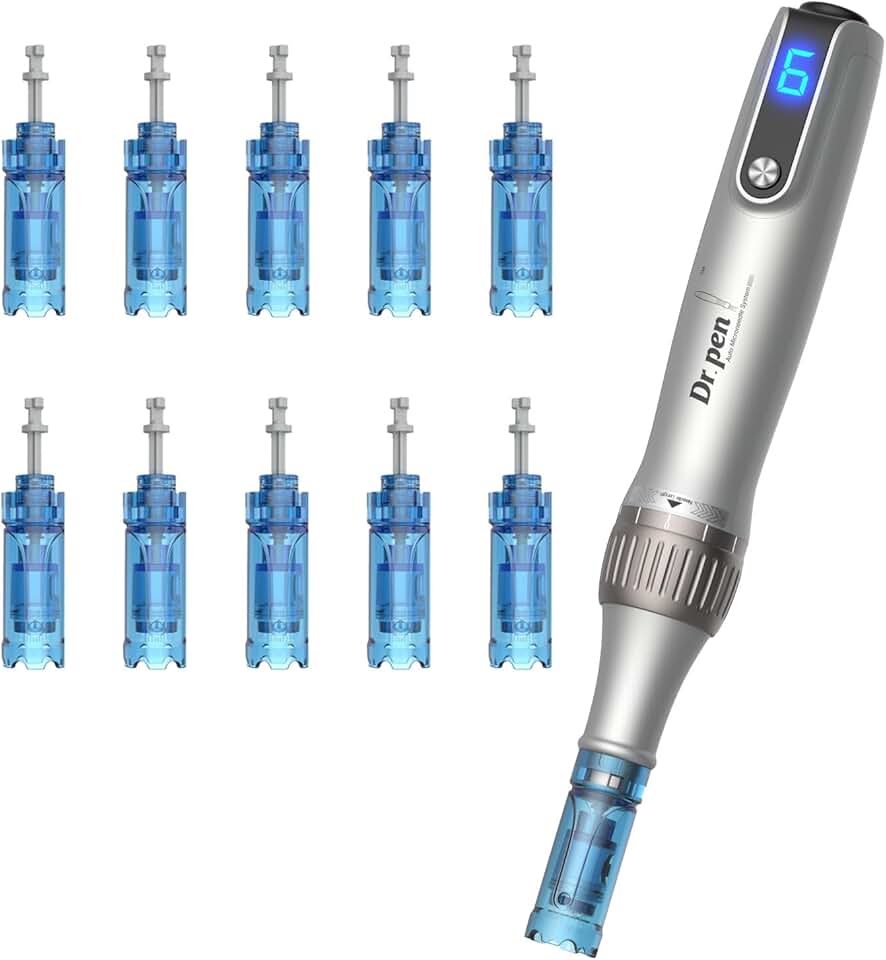
Adjustable needle depth · Digital display for speed and depth control · Designed for home use
This electric microneedling pen offers advanced control for at-home users looking to target acne scars with adjustable settings.
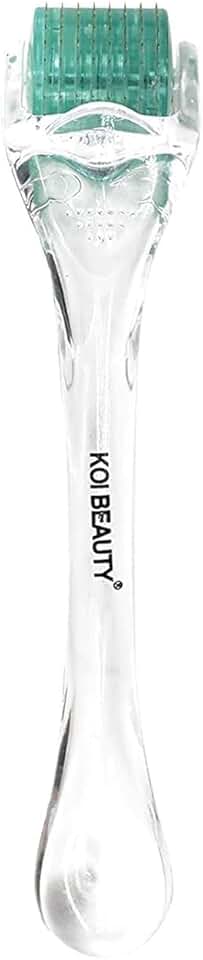
200 individual titanium microneedles · Suitable for face, body, and scalp · Professional-grade tool for home use
This titanium derma roller provides a professional-grade option for at-home treatment, suitable for various areas of the body and scalp.

Designed for face, beard, and hair · Includes a free storage case · Suitable for men and women
An accessible and budget-friendly option, this derma roller is versatile for facial use, beard growth, and hair stimulation, complete with a protective case.

540 titanium microneedles · 0.25mm needle length · Designed for home skincare routines
This 0.25mm titanium derma roller is an economical choice for beginners exploring at-home microneedling for superficial skin concerns.

6-in-1 kit with 5 replaceable heads · Multiple needle counts (300, 720, 1200) · Needle lengths of 0.25mm and 0.3mm
This comprehensive 6-in-1 kit offers flexibility with multiple needle sizes and replaceable heads, allowing users to customize their at-home microneedling experience.
As an Amazon Associate I earn from qualifying purchases. Prices may vary.
Finding a Qualified Practitioner
Choosing the right practitioner is crucial for a safe and effective micro-needling experience. I strongly recommend seeking out a board-certified dermatologist or plastic surgeon with extensive experience in performing micro-needling. Don’t be afraid to ask about their training, qualifications, and the number of micro-needling procedures they’ve performed.
During a consultation, ask about the safety protocols in place, the type of device they use, and what you can expect during and after the treatment. Make sure they prioritize hygiene and sterilization to minimize the risk of infection. It’s also important to discuss your medical history and any medications you’re taking to ensure you’re a good candidate for the procedure. A reputable practitioner will be happy to answer all of your questions and address any concerns you may have.

No comments yet. Be the first to share your thoughts!